What Is Custom Web Development?
A template site can get you online fast. It can also box your business into someone else’s layout, someone else’s logic, and someone else’s limits. That is usually the point where business owners start asking, what is custom web development, and whether it is worth the investment.
Custom web development means building a website around your business instead of forcing your business into a prebuilt theme or rigid platform setup. The design, functionality, integrations, and user experience are tailored to your goals, your customers, and the way your team actually works. It is not about adding complexity for the sake of it. It is about creating a website that performs better because it is built with purpose.
What Is Custom Web Development in Practice?
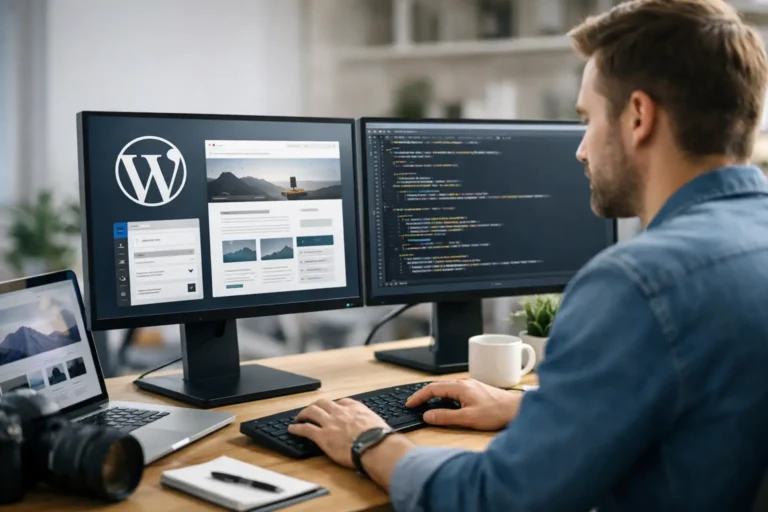
In practical terms, custom web development is the process of planning, designing, and coding a website or web functionality from the ground up, or heavily tailoring an existing platform, to fit specific business needs. That can mean a custom WordPress build, a WooCommerce store with unique checkout behavior, a Shopify storefront with specialized features, or a fully bespoke web application.
The key difference is that custom work starts with requirements, not a theme demo. A development team looks at what your business needs the site to do, who it needs to serve, and what should happen after a visitor lands on the page. Then the site is built to support those outcomes.
For one company, that could mean a lead generation website with fast-loading service pages, local SEO structure, and CRM integration. For another, it could mean an ecommerce experience with custom product filtering, subscription logic, and accessibility improvements that reduce friction at checkout. Same discipline, different solution.
Why Businesses Choose Custom Over Templates
Most businesses do not start with custom development because they want something flashy. They choose it when standard options stop supporting growth.
Templates are useful for simple needs, especially when budget and timeline are tight. But they come with trade-offs. They often include bloated code, limited flexibility, design compromises, and plugin dependency that can create performance or maintenance issues over time. If your website is central to lead generation, sales, bookings, or customer support, those compromises start to cost you.
Custom web development gives you more control over the parts that matter most. You can shape the customer journey, improve page speed, support search visibility, connect business systems, and create experiences that match how people actually buy or inquire. That level of fit is hard to get from off-the-shelf solutions.
There is also a branding advantage. When your site looks and functions like every other theme-based site in your category, it is harder to build trust. A custom site can better reflect your business, your positioning, and your value in a way that feels credible and distinct.
What Custom Web Development Usually Includes
Custom development is broader than design. A lot of business owners assume it just means a unique homepage. In reality, it touches the full structure and performance of the website.
A custom project often includes tailored page templates, custom functionality, integrations with tools your team already uses, performance optimization, technical SEO setup, and accessibility improvements. It may also include backend workflows that make content management easier for your staff.
That matters because a website is not just a marketing asset. It is often an operational tool. If your team has to fight the site every time they update content, manage products, or respond to leads, the site is not doing its job.
Custom development can solve those internal problems too. A smarter admin experience, cleaner architecture, and well-planned functionality can save time and reduce headaches after launch.
What Is Custom Web Development Worth for Growth?
The short answer is this: it depends on how much your website impacts revenue.
If your site is mostly a digital business card, custom development may not need to be extensive. But if the website drives leads, supports online sales, books appointments, educates buyers, or serves as a primary customer touchpoint, investing in a tailored build can create measurable returns.
A better-built website can improve conversion rates, reduce bounce rates, increase search visibility, and support stronger ad performance. Faster load times can keep people from leaving. Cleaner page structure can help search engines understand your content. Better user experience can make it easier for people to take action.
This is where the business case becomes clear. Custom development is not valuable because it is custom. It is valuable when it removes friction between your audience and the action you want them to take.
Common Examples of Custom Web Development
Many companies are already close to needing custom work even if they have not labeled it that way.
A service business may need location-specific landing pages, advanced quote forms, call tracking integration, and schema markup that helps search performance. A retailer may need a custom product configurator, inventory sync, and a cleaner mobile checkout flow. A school or nonprofit may need better event management, donation tools, and ADA-conscious design choices that make the site more inclusive and easier to use.
Even something as simple as integrating your website with a CRM, email platform, booking system, or AI chatbot can move beyond plug-and-play. The more important those systems are to your workflow, the more valuable custom integration becomes.
Where Custom Development Fits With WordPress, WooCommerce, and Shopify
Custom does not always mean building everything from scratch on a blank canvas. In many cases, the smartest move is customizing a strong platform rather than replacing it.
WordPress is a common choice for content-rich websites because it gives businesses flexibility and control. With the right development approach, it can support custom templates, performance tuning, SEO-friendly structure, and easy content management without the baggage of an overloaded theme.
WooCommerce works well for businesses that want ecommerce flexibility and custom features inside WordPress. Shopify is often a strong fit for brands that need a stable commerce platform with room for tailored front-end experiences and app integrations.
The right platform depends on your business model, product complexity, content needs, and internal resources. A good development partner should not force every business into the same stack. They should recommend the approach that supports your goals now and leaves room for growth later.
The Trade-Offs You Should Know
Custom web development is not the right answer for every business, and a credible agency should say that plainly.
It usually requires a higher upfront investment than using a template. It can also take more time because strategy, design, development, testing, and refinement are all more deliberate. If you need a very basic site live next week, custom is probably not the best route.
There is also a quality gap in the market. Some providers sell “custom” when they really mean lightly modified templates. Others overengineer projects with features a business does not need. The goal is not to make the site more complex. The goal is to make it more effective.
That is why discovery matters. Before any code is written, the project should be tied to real business needs: lead quality, sales performance, site speed, accessibility, content management, or search visibility. Without that clarity, custom development can drift into expensive guesswork.
How to Tell If Your Business Needs It
A custom build becomes more compelling when your current site is holding back performance. Maybe it loads slowly, ranks poorly, breaks on mobile, creates admin headaches, or fails to convert traffic into inquiries or sales. Maybe your business has grown, but your website still reflects an earlier stage.
You may also need custom development if your customer journey is more specific than what standard themes handle well. Businesses with multiple services, complex product catalogs, specialized forms, membership features, or compliance requirements often need more than a basic setup.
Accessibility is another factor that gets overlooked. If your site needs to align more closely with WCAG 2.1 AA expectations, custom work can help address structural, navigational, and usability issues that generic themes often ignore.
For growing businesses, this is usually the real question: is your website helping your business move forward, or are you working around its limitations every week?
Choosing the Right Development Partner
If you decide custom development makes sense, the next step is choosing a team that understands both code and outcomes. Technical skill matters, but business alignment matters just as much.
You want a partner who asks about leads, revenue, user behavior, content strategy, SEO, accessibility, and post-launch growth. You also want transparency about trade-offs. Not every feature is worth building, and not every shortcut is worth taking.
The strongest web projects come from teams that think beyond launch day. That includes performance, maintainability, search visibility, and how the site will support your sales or marketing efforts over time. That is the difference between a website that simply exists and one that earns its place in your business.
At Unplug Studio, that is the standard: websites built to perform, convert, and support measurable growth.
A good custom website should feel like it fits your business because it was built for your business. If your current site feels like a workaround, that is usually your answer.